
Fuel Quality Problems Usually Start in the Tank: 5 Ways to Protect Engines and Fuel Spend
Fuel quality problems usually start long before an engine throws a code or a driver complains that a unit feels weak.
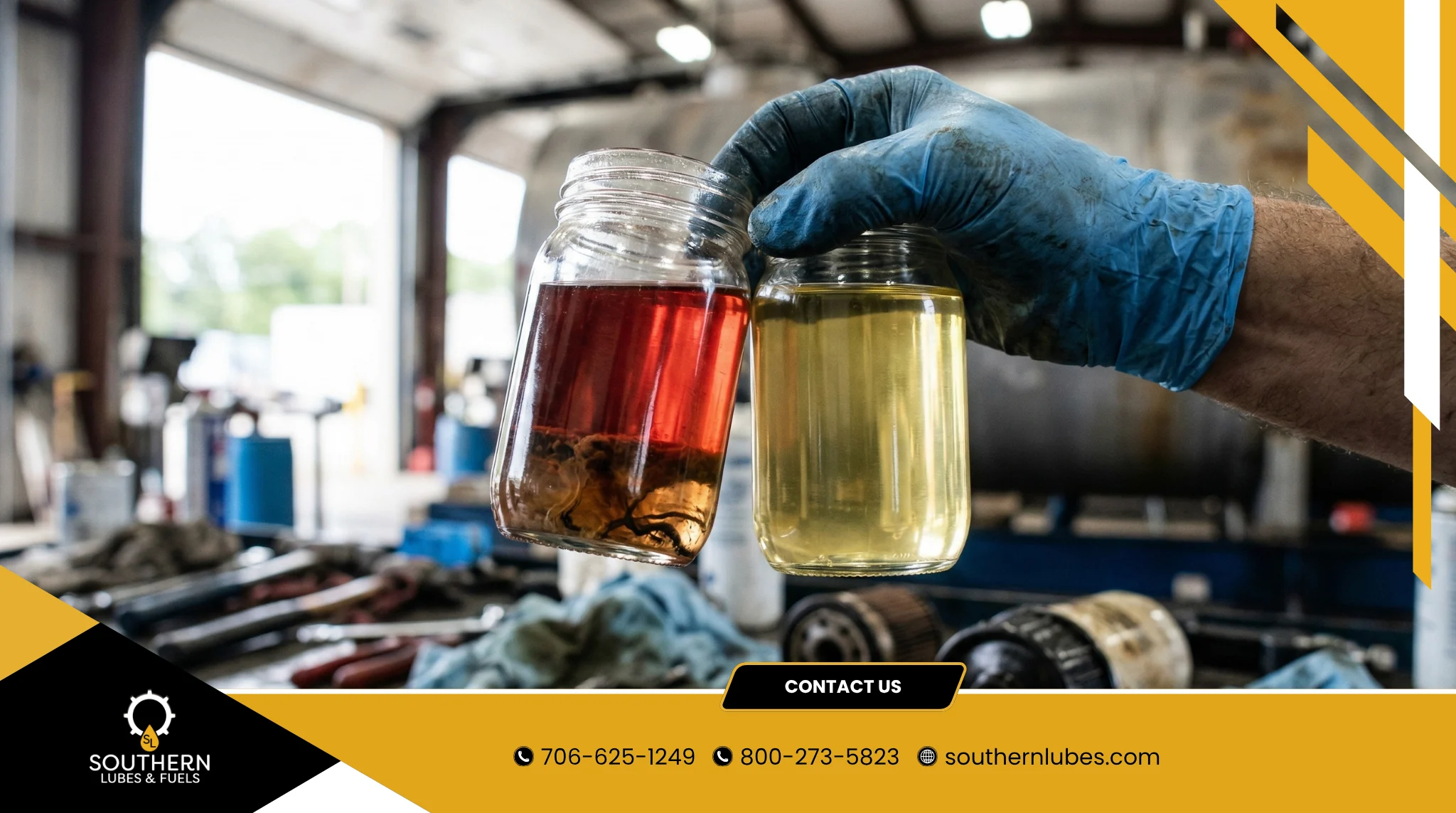
They usually start in quieter ways — a tank that keeps picking up water, a filter that plugs early, diesel that looks hazy in a sample jar, a machine that starts harder on Monday than it did on Friday, or a recurring issue that gets treated like “just part of running equipment.”
That is what makes fuel quality easy to underestimate.
For fleets, farms, and job sites, fuel is already one of the biggest operating costs on the books. When fuel quality slips, the same gallon starts costing more than once. You pay for it at delivery, then again through reduced performance, avoidable service work, filter changes, and downtime that shows up at the worst possible time.
At Southern Lubes & Fuels, this is one of the more practical conversations diesel operations can have. A lot of fuel-related problems are preventable — but only if someone looks at storage, transfer, turnover, and handling before the engine ends up doing the talking.
Why Fuel Quality Problems Are So Expensive to Miss
Fuel quality problems are not just a “fuel issue.” They become an engine issue, a maintenance issue, a scheduling issue, and eventually a cost-control issue.
The field signs are usually familiar:
cloudy or hazy diesel
dark material or sludge in a bottom sample
repeated filter plugging
rough running or inconsistent power
hard starts
recurring injector or pump complaints that seem to come back
Most fuel quality problems start in the tank or in the transfer process long before they show up as a repair invoice.
For a practical technical reference on storage housekeeping, water control, and contamination warning signs, the Preventative Maintenance Guide for Diesel Storage and Dispensing Systems is a useful starting point.
1. Check the tank before blaming the engine
When a diesel unit starts acting up, it is easy to focus on the engine first.
But one of the most useful field habits is to check the storage side before assuming the problem began at the injectors or pump. Water, microbial growth, dirt, rust, and old material at the bottom of a tank can all create fuel quality problems that later look like engine performance issues.
If a tank keeps showing water, or if samples repeatedly come back cloudy or dirty, that is not something to normalize. It is a signal to inspect:
the tank bottom
water drawdown frequency
venting and seals
fill practices
how long the product is sitting between deliveries
The earlier that gets addressed, the better the odds of avoiding downstream component problems.
2. Treat repeat filter changes like real data
Filter plugging gets dismissed too often.
If you are replacing filters early, or if the same tank keeps causing the same complaint across multiple units, the right response is not just to replace the filter and move on. The right response is to ask what the filter is trying to tell you.
Repeated filter issues often point to:
contamination in storage
microbial activity
degraded fuel
stirred-up material in the tank
a handling problem during transfer
This is one of the most practical ways to spot fuel quality problems early. A filter that plugs once may be random. A pattern usually is not.
3. Match delivery volume to actual turnover
Fuel buying decisions are often made around pricing, but fuel quality is also affected by turnover.
A tank that turns quickly behaves differently than a tank that sits. That matters in operations where demand rises and falls by season, project phase, or equipment mix. A farm in peak use, a construction yard with changing consumption, and a steady transportation fleet all need a different delivery rhythm.
One of the smarter ways to protect engines and fuel spend is to size deliveries around real consumption instead of carrying more product than the operation can turn in a healthy window.
The cheapest gallon is not always the cheapest gallon if it sits too long, takes on contamination, and starts creating service problems later.
4. Protect fuel quality during every transfer
Even clean diesel can become a problem if the transfer process is careless.
Fuel quality problems also come from:
dirty fill points
contaminated transfer equipment
poor housekeeping around tanks
inconsistent delivery or receiving practices
storage areas that invite water and debris
That is why a fuel program should not stop at “Who delivered the diesel?” The better question is, “What happened to it after it got here?”
For many operations, improving transfer discipline is one of the fastest ways to reduce repeat issues without making major changes elsewhere.
5. Work with a supplier who understands how the operation actually runs
Fuel quality improves when the supplier understands more than just the delivery address.
A fleet running highway diesel, a farm fueling tractors and support equipment, and a contractor running mixed heavy equipment do not all need the same cadence, guidance, or storage conversation. A useful supplier should be able to help with:
on-road and dyed off-road diesel needs
seasonal demand shifts
delivery timing and turnover
practical storage questions
coordinating diesel and DEF support where relevant
Southern Lubes’ public site already positions the company around fleets, farms, transportation, construction, and other equipment-heavy industries, with diesel, lubricants, and DEF offered across those use cases. That makes fuel quality a practical operating conversation, not just a product conversation.
If you want to compare more fuel and lubricant options, review the full product line and catalog.
FAQ
What are the most common signs of fuel quality problems?
Common signs include cloudy diesel, sludge or dark material in tank samples, repeated filter plugging, hard starts, rough running, and fuel-system complaints that keep returning.
Can good diesel still become a problem after delivery?
Yes. Water, microbial growth, dirty transfer equipment, poor tank housekeeping, and slow turnover can all damage fuel quality after delivery.
Is repeated filter plugging usually a fuel issue?
It can be, especially when the same tank or same group of units keeps showing the same pattern. Repeated filter trouble is often one of the earliest warning signs.
Can Southern Lubes help with fuel quality concerns?
Southern Lubes & Fuels publicly serves diesel-heavy operations across North Georgia and already provides product, service, and quote paths tied to fleets, farms, and job sites.
The bottom line
Fuel quality problems usually do not arrive as a surprise. They leave clues first.
Water in storage. Early filter plugging. Hazy product. Recurring rough running. Low-turnover tanks. Transfer practices that invite contamination. Those are all opportunities to fix the system before the repair bill becomes the diagnosis.
If your operation is seeing repeat filter issues, inconsistent engine performance, or fuel spend that does not seem to add up, now is a good time to review storage, handling, and supply before the next preventable problem becomes downtime.