
5 Proven Ways Heavy Equipment Lubricants Cut Downtime for Fleets and Job Sites
Heavy equipment lubricants do more than reduce friction. They directly affect uptime, service life, and whether a truck, tractor, loader, excavator, forklift, or hydraulic system is ready when the work starts.
That matters because downtime rarely costs only the price of a part. It usually costs missed loads, delayed pours, rescheduled crews, overtime, idle operators, and jobs that start slipping behind schedule.
In real operations, a lot of those problems do not begin with a dramatic failure. They start with something smaller: the wrong oil for the duty cycle, the wrong grease at a high-load point, contaminated hydraulic fluid, or service intervals that look fine on paper but do not match how the equipment is actually being used.
That is where the right heavy equipment lubricants make a measurable difference.
At Southern Lubes & Fuels, we work with fleets, farms, contractors, and industrial operations that need products matched to real operating conditions, not just a label on a drum. The goal is simple: keep equipment working, reduce avoidable wear, and lower the chances of unplanned downtime.
Why Heavy Equipment Lubricants Matter More Than Most Teams Think
The best heavy equipment lubricants are not just there to “keep things moving.” They create film strength under load, manage heat, protect against contamination, reduce corrosion, and help parts survive the kind of repetitive stress that destroys components over time.
When lubrication decisions are wrong, the damage is usually gradual before it becomes expensive. A bearing starts running hotter than normal. A pin or bushing loses protection in a dirty environment. A hydraulic system becomes sluggish or inconsistent. An engine spends too much time idling under severe conditions with oil that is technically acceptable, but not ideal for the way the unit is being worked.
By the time those issues show up as visible failures, the business is already paying for them.
1. Match engine oil to both the OEM spec and the way the unit actually works
One of the most common lubrication mistakes is assuming that if the viscosity looks familiar, the oil must be fine.
It does not work that way.
Engine oil needs to match:
the OEM specification
the emissions-system requirements
the operating temperature range
the duty cycle
how much idle time, stop-start stress, dust, load, and run hours the unit actually sees
A truck that runs long highway miles is not asking the same thing from its oil as a construction unit that idles, crawls, and works in dirt all day. A tractor in peak season is not operating under the same conditions as a lightly used support vehicle.
This is why Southern Lubes publicly lists a real range of heavy-duty engine oil options instead of pushing one answer for every operation. Their site currently surfaces products such as Shell ROTELLA, Mystik JT-8, MAG 1, Citgo Citgard, and Southern Lubes CK-4 blends across product and service pages. That kind of lineup matters because the “right” answer depends on what the equipment is actually doing.
For many operators, better oil decisions come down to asking a more useful question:
“What does this machine do all day?”
That usually tells you more than asking only what the manual says in isolation.
2. Stop treating grease like one interchangeable product
Grease is where a lot of operations quietly lose money.
It is common to see one cartridge used across multiple grease points simply because it is available, familiar, or already on the truck. But pins, bushings, fifth wheels, axle points, wheel ends, and other wear areas do not all live under the same conditions.
Some grease points deal with:
higher shock loads
constant contamination
washout risk
heat buildup
slower movement under extreme pressure
high-speed rotation
Those conditions matter.
For a broader technical overview of grease selection and handling, the NLGI Grease Guide is a useful industry reference.
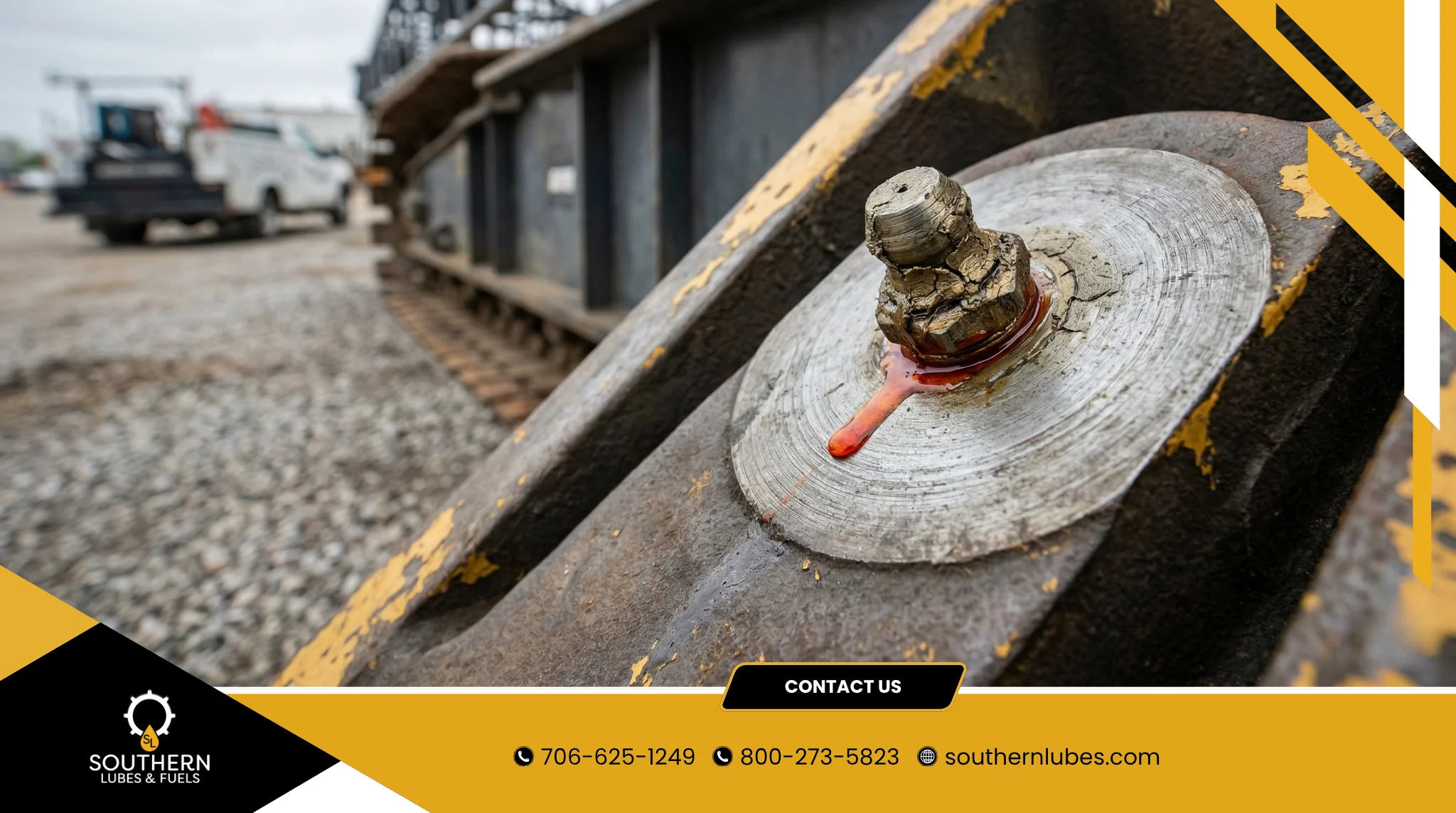
A multi-purpose grease may be perfectly fine in one area and a bad choice in another. Over-greasing can be a problem. Mixing incompatible products can be a problem. Using a grease that cannot stay in place under heat, load, or contamination can absolutely become a problem.
This is one reason Southern Lubes’ site separates product types like hi-temp grease, multi-purpose grease, fifth wheel grease, axle/hub grease, Shell Gadus, and Mystik JT-6 Hi-Temp instead of treating “grease” like one generic bucket. Their public copy specifically highlights Mystik JT-6 for shock-load and EP performance and Shell Gadus for a broad range of general and specialized grease applications.
In the field, the practical rule is simple:
Grease by load, heat, contamination, and speed — not by habit.
3. Keep hydraulic fluid clean, correct, and application-specific
Heavy equipment lubricants also include hydraulic fluids, and hydraulic systems are less forgiving than many teams realize.
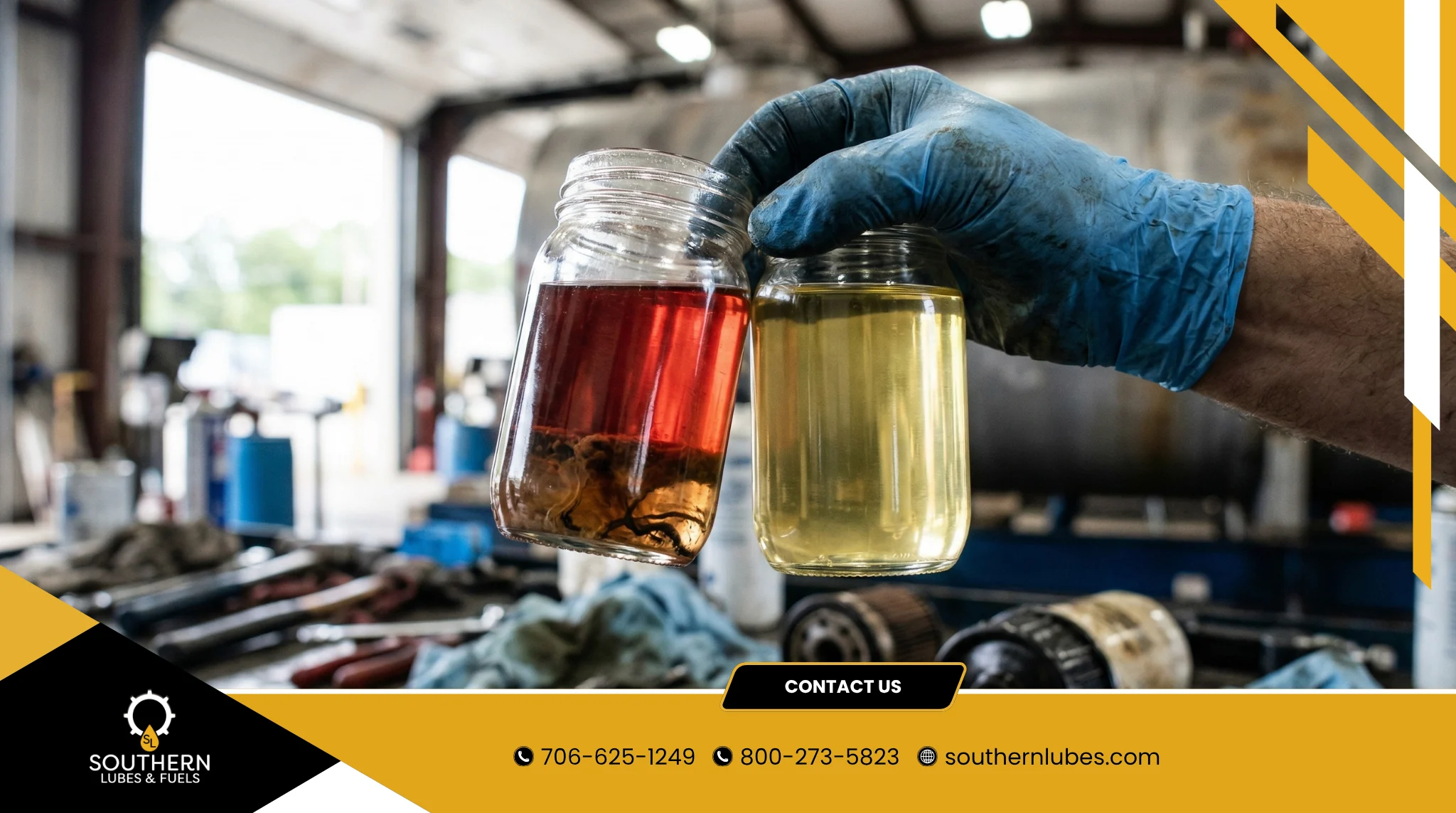
The fastest way to shorten hydraulic component life is not always catastrophic contamination. It can be repeated exposure to the wrong viscosity, dirty transfer practices, water intrusion, mixed fluids, or running fluid too long after the system has started telling you it is degrading.
When hydraulic fluid is wrong for the application, the symptoms often show up as:
inconsistent response
sluggish cold starts
noisy pumps
temperature issues
accelerated wear in pumps, valves, and seals
shorter hose and component life
Southern Lubes publicly lists Shell Tellus on its Products page and also surfaces specialty hydraulic options like Eco-Clear 32 and Crystal Clear 68 on regional lubricant pages. That matters because different equipment and environments require different hydraulic-fluid behavior, and one “close enough” product does not fit every system.
A practical maintenance habit here is to treat hydraulic cleanliness as a process, not just a product choice:
use clean transfer equipment
protect storage from contamination
watch for fluid darkening, haze, or foaming
investigate slow response before it becomes a repair event
4. Build service intervals around reality, not memory
Even the best heavy equipment lubricants cannot do their job if the service schedule is based on guesswork.
A lot of operations still default to:
“when we have time”
“when somebody remembers”
“every so often”
“what we did on the last machine”
That creates inconsistency fast.
Real-world service intervals should be built around:
OEM guidance
hours and load
heat
dust and contamination exposure
idle time
seasonal demand
patterns you are already seeing in the equipment
A loader used hard in a dirty environment may need a different greasing rhythm than a support unit. A farm operation in peak season may need a much tighter review cadence than the same equipment in a slower period. A hydraulic system showing heat or response issues should not wait for the calendar to catch up.
This is where disciplined preventive maintenance becomes one of the cheapest forms of downtime prevention available. Better products matter, but timing matters too.
5. Simplify lubricant decisions with a supplier who understands the equipment mix
Another quiet source of downtime is product sprawl.
Over time, operations often end up carrying too many lubricants with too little clarity around:
which product goes where
where substitutions are acceptable
which machines are severe-service units
which products are actually being used too broadly
That creates mistakes.
A good supplier should do more than take orders. They should help you:
review the equipment mix
match products to real operating conditions
reduce unnecessary SKU overlap
keep critical products in stock
make sure the products you standardize around still fit the actual work
Southern Lubes is already positioned publicly around transportation, agriculture, flooring, heavy-duty construction, and aviation, with products and resources tied to those industries. That makes this kind of consultative support a natural part of the conversation, especially when customers are already reviewing Products, Industries We Serve, or the Product Line & Catalog.
The operational win here is not just convenience. It is fewer wrong-product decisions, fewer supply gaps, and a better chance of catching lubrication issues before they become repair tickets.
FAQ
What are heavy equipment lubricants?
Heavy equipment lubricants include engine oils, greases, hydraulic fluids, gear oils, and other specialty fluids used to reduce wear, manage heat, protect components, and support uptime in demanding equipment.
Can the wrong lubricant really cause downtime?
Yes. Wrong-product use can increase wear, shorten component life, affect hydraulic performance, and create failures that were largely preventable.
How often should equipment be greased or serviced?
That depends on the OEM guidance, operating hours, load, contamination exposure, temperature, and how severe the real-world duty cycle is. The right interval is rarely just a calendar date.
Where can I get lubricant help in North Georgia?
Southern Lubes & Fuels supplies oils, greases, hydraulic fluids, and related products for multiple industries across North Georgia and already offers a direct Get Quote path on the site.
The bottom line
Reviewing heavy equipment lubricants is one of the most practical ways to cut preventable downtime.
If the oil does not match the engine and duty cycle, if grease is being treated like a one-size-fits-all product, if hydraulic fluid is not being protected from contamination, or if service intervals are too loose for real operating conditions, the equipment will eventually show it.
The good news is that these are fixable problems.
Southern Lubes & Fuels supplies products that already align with the kinds of operations they publicly serve — fleets, farms, construction crews, industrial plants, and other equipment-heavy businesses across North Georgia. If your team wants to reduce wear, improve consistency, and make better lubrication decisions before the next failure shows up, now is a good time to review the lineup and the service plan behind it.