
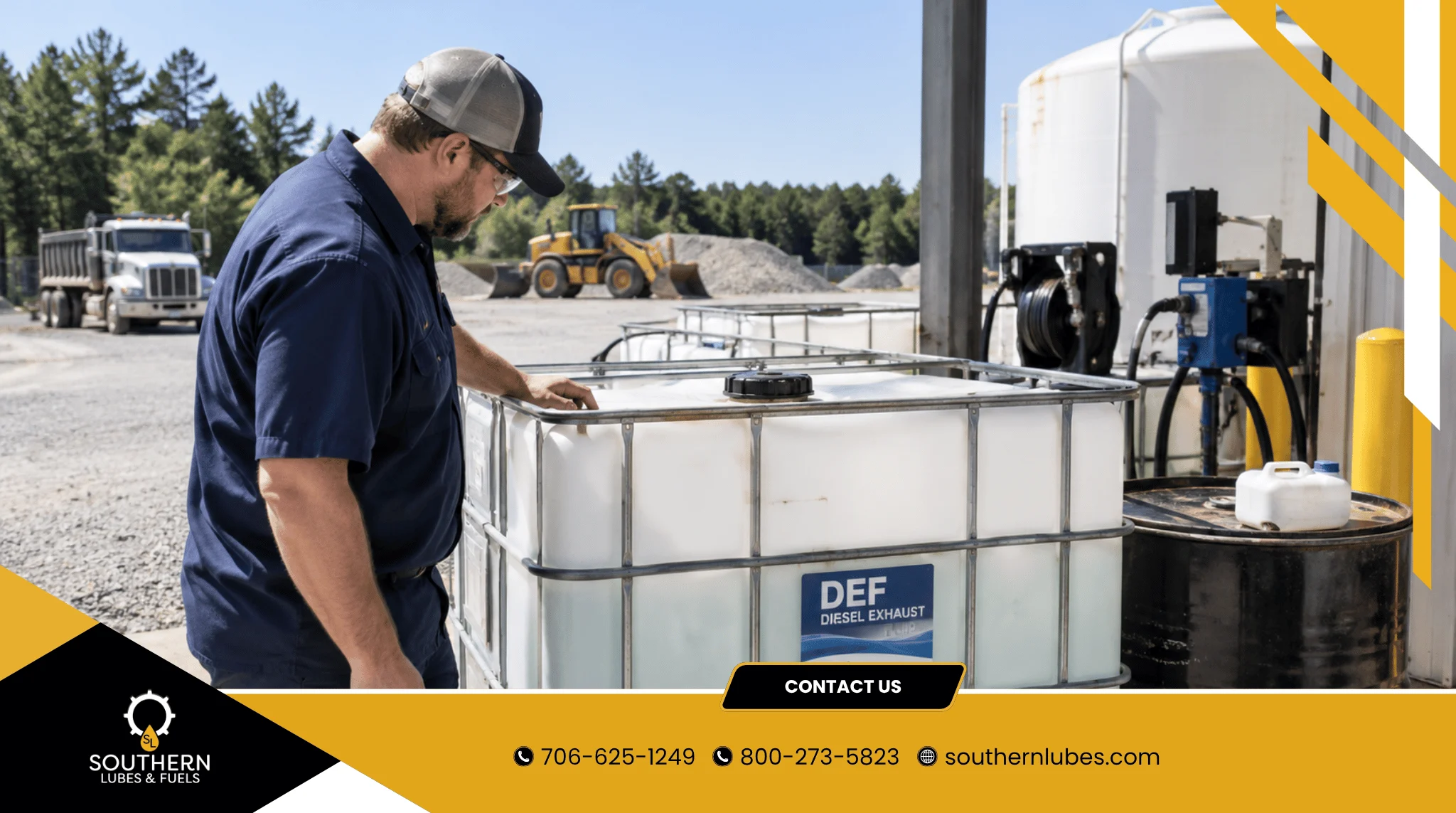
DEF + Summer Heat: How to Avoid Derates, Crystallization, and Waste
DEF storage is especially important during the summer, when fleets, construction crews, and diesel equipment operators face increased risks of product waste, contamination, and handling problems.
DEF is one of those necessities that’s easy to ignore until it becomes a problem. As temperatures rise, proper storage and dispensing practices help protect product quality and reduce preventable equipment issues.
And summer is when that happens most often.
In June, fleets, construction crews, and operations running diesel equipment start seeing DEF-related headaches that look like:
- warning lights that won’t go away
- reduced engine power (derate conditions)
- “we just filled it” confusion
- crystallized residue around caps and nozzles
- wasted product and messy handling
The good news: most DEF problems are preventable—and the fixes are usually simple.
This article isn’t about scare tactics. It’s about keeping equipment running when workloads spike.
The 3 summer mistakes that cause most DEF problems
1) Storing DEF in direct heat and sun
DEF should be stored out of excessive heat and temperature extremes. Summer storage in direct sun—especially on job sites—can accelerate degradation and create avoidable waste.
Best practice:
- Store in shade or indoors when possible
- Avoid leaving totes/drums in direct sunlight
- Rotate product (first in, first out)
2) Contamination from dirty dispensing
DEF is sensitive. A little contamination can cause big issues.
Common contamination sources:
- dirty funnels and containers
- shared pumps/nozzles used for other fluids
- open caps, dust exposure, job site grime
- topping off from “whatever jug is around”
Best practice:
- Use dedicated DEF dispensing equipment
- Keep caps closed and containers sealed
- Keep the fill area clean and dry
- Treat DEF handling like a controlled process, not an afterthought
3) Ignoring crystallization until it becomes a restriction
That white, crusty buildup around caps/nozzles is often crystallized DEF residue. It can lead to mess, wasted product, and in some cases restrictions or sensor-related problems.
Best practice:
- Wipe spills and residue quickly
- Keep nozzles clean
- Store and dispense in a way that reduces drips and exposure
A quick DEF checklist for June (fleet + job site friendly)
If you manage trucks or equipment, run through this:
- Where is DEF stored today? (sun/shade/indoors)
- Are we rotating product or letting containers sit?
- Do we use dedicated DEF dispensing tools only?
- Do we see crystallization at caps or fill points?
- Are we buying DEF formats that match our usage? (jugs vs. drums vs. totes)
If any of these are “no” or “not sure,” that’s your easy win.
Match DEF supply to how you actually operate
Not every operation needs the same DEF setup.
- High-volume fleets: totes or drums can reduce handling and improve consistency
- Job sites / mixed use: having the right combination (bulk + jugs) prevents last-minute shortages
- Smaller operations: consistent sourcing + clean handling is the main priority
The goal is the same: keep DEF simple, clean, and reliable.
When should you replace stored DEF?
Proper DEF storage also means monitoring inventory and product condition. Check container labels for storage recommendations and expiration information, and follow the manufacturer’s guidance if the fluid has been exposed to excessive heat or questionable handling conditions.
Avoid mixing old and new supplies without checking product requirements, and never use containers that may have been contaminated by other fluids. If you are unsure whether stored DEF is still suitable for use, consult the supplier before dispensing it into equipment. A consistent inspection routine helps fleets and job sites reduce avoidable waste and maintain reliable DEF handling practices.
Keep uptime high when summer is unforgiving
When workloads rise, the last thing you want is a preventable derate or a sensor issue caused by sloppy handling.
A clean storage plan + the right supply format is usually the difference.
Need DEF or fleet fluids?
Browse options here:
https://southernlubes.com/products/
Want pricing, delivery options, or a supply plan?
Request a quote here:
https://southernlubes.com/get-quote/
In or around Calhoun, GA?
If your operation needs local diesel support too, see this page:
https://southernlubes.com/calhoun-georgia-diesel/